
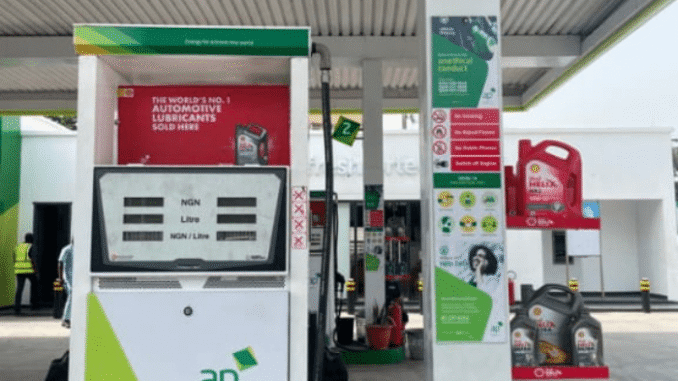
Two years after Nigeria’s bold move to end fuel subsidies, a growing chorus of citizens and experts are questioning the fate of the savings, pointing to rising allocations with little to show on the ground.
In mid-2023, Nigeria’s decision to terminate fuel subsidies was hailed as a long-overdue act of fiscal discipline. Policymakers and analysts argued the move would unlock critical funds for rebuilding infrastructure, strengthening health and education, and accelerating development.
But two years on, disillusionment is replacing optimism.
According to the Federation Account Allocation Committee (FAAC) and Agora Policy, N28.78 trillion was shared among Nigeria’s three tiers of government in 2024—a staggering 79% increase from N16.28 trillion in 2023, and more than double the N12.36 trillion distributed in 2022. In May 2025 alone, FAAC disbursed N1.681 trillion—up 72% from the same month in 2023.
Much of this largesse was directed to state governments, ostensibly offering a “once-in-a-generation” opportunity to overhaul broken institutions. Yet, Nigerians continue to battle inflation, decaying infrastructure, and underfunded public services. The burning question remains: Where did the money go?
Echoes of the Past
Veterans of Nigeria’s fiscal politics are reminded of the Excess Crude Account (ECA), launched in 2004 to save oil earnings above budgetary benchmarks. While the account reached over $20 billion during President Goodluck Jonathan’s tenure, it had dwindled to roughly $2 billion by 2015, largely due to pressures from state governors seeking larger monthly allocations.
Former President Jonathan and ex-Finance Minister Ngozi Okonjo-Iweala both recounted how resistance from state governments derailed savings efforts. In contrast to that era, today’s ECA stands nearly empty, with just $473,754.57 left as of April 2025, according to the Accountant-General of the Federation, Shamseldeen Ogunjimi.
Warnings from Economists
Critics now fear the fuel subsidy savings are being similarly squandered—used to plug recurrent expenses or fund politically expedient projects rather than long-term investment.
“Sharing the subsidy savings instead of investing them is short-sighted,” warned Simon Samson, chief economist at ARKK Economics. “We’re consuming the future to finance today.”
Unlike during the ECA era, when savings helped establish the Sovereign Wealth Fund, today’s windfall shows little evidence of forward-looking planning. “This is not fiscal prudence—it’s fiscal erosion,” Samson added.
A Politicized Windfall?
Some analysts suggest the disbursement pattern is not just financially questionable—it may be politically motivated. There are growing claims that the federal government is using the funds to curry favor with state governors, especially amid recent defections to the ruling party and public displays of loyalty.
“This could easily devolve into rentier politics,” said one Abuja-based policy analyst. “Instead of incentivizing policy reform, it rewards political alignment.”
Excuses, Disbelief, and Growing Discontent
State governors, in response to criticism, argue that inflation and currency volatility have eroded the purchasing power of allocations. But many citizens see this as political deflection.
“We hear about trillions, but where’s the progress?” asked Olakunle Samuel, a resident of Ondo State. “Our roads haven’t improved. Hospitals are still broken. Life is getting harder.”
From civil servants to traders, ordinary Nigerians are increasingly frustrated by the gulf between soaring government revenues and their stagnant daily reality.
A Tipping Point?
As Nigeria rides a revenue surge sparked by the end of fuel subsidies, citizens and analysts alike are urging leaders to act with vision—or risk repeating past mistakes.
“This is not just about numbers,” the policy analyst added. “It’s about our future. Public finances shouldn’t be a political allowance—they’re a national trust. And right now, we’re eating tomorrow’s bread today.”