
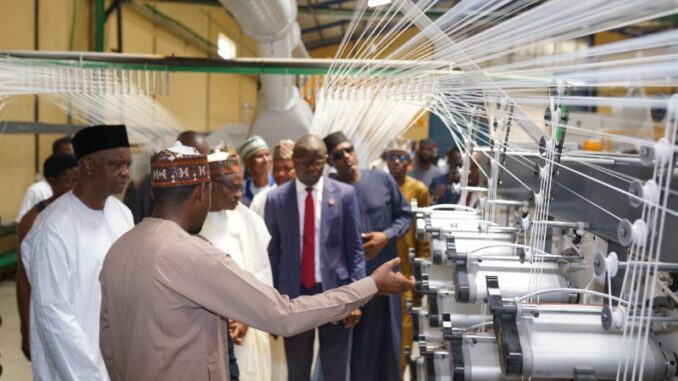
BlackHorse Holding Company Limited has launched a 400 metric ton (MT) rice mill and a 2,240-ton-per-month sack production plant in Kano, marking a major boost to Nigeria’s agricultural value chain and food security efforts.
The Launch in Kano
The unveiling took place at the Crescent Rice Mill facility in Danzaki, along Hadejia Road, Kano, where the rice mill operates under the trade name Crescent Rice Limited and the sack manufacturing plant under Aminchi Bags Limited. Both facilities are powered by a 3MW independent sustainable energy solution, ensuring reliable operations and reducing dependence on the national grid.
Production Capacity and Growth
- The rice mill was initially set up in 2024 with a daily capacity of 80 MT.
- By 2025, two additional production lines increased output to 240 MT per day.
- With two more units added in 2026, the facility now achieves its 400 MT daily production target.
- The sack plant produces 2,240 tons per month, addressing packaging challenges for farmers and businesses.
Quality Recognition
The company’s products have received the ARSO dual mark of quality from the Standards Organisation of Nigeria (SON), validating compliance with African Standard NIS ARSO 464:2017. This recognition strengthens consumer trust and positions Crescent Rice as a premium product in the Nigerian market.
Strategic Vision
According to Rahul Bakliwal, Managing Director of Crescent Rice Mills, the investment was made to support Nigeria’s food supply chain, solve packaging problems, and create value for stakeholders. He emphasized the company’s role in building sustainable solutions for agriculture.
Muhammad Sani Utai, Chairman and CEO of BlackHorse Holdings, highlighted that what began as an ambitious idea three years ago has now evolved into a robust operation. Despite economic challenges, the company plans to expand production capacity beyond 500 MT and add an oil mill for groundnut oil and sorghum processing, alongside its bagging facility.
Broader Impact
- Food Security: Increased rice milling capacity supports Nigeria’s drive for self-sufficiency in staple foods.
- Employment: The plants create jobs in Kano and across the value chain.
- Industrial Growth: The sack plant addresses packaging shortages, reducing reliance on imports.
- Future Expansion: Plans for oil milling and sorghum processing will diversify Nigeria’s agro-industrial base.