
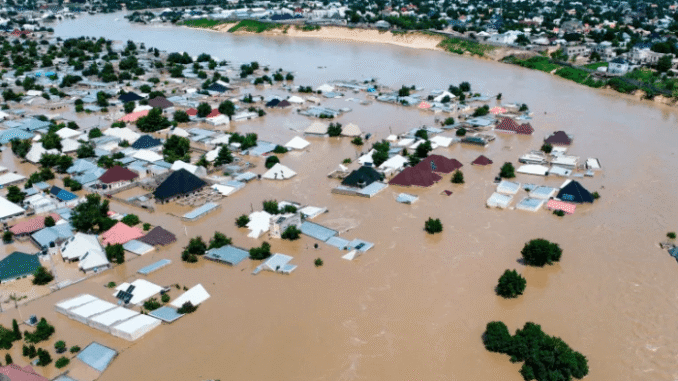
Floods have destroyed over $15 billion worth of assets in Nigeria between 2024–2026, and experts warn that 6.1 million Nigerians face severe flood risks during the 2026 rainy season. Insurance leaders are urging the government to adopt disaster risk financing frameworks to protect households, businesses, and infrastructure.
Scale of the Crisis
- Economic losses: More than $15 billion wiped out in farmlands, businesses, and infrastructure in just two years.
- Human impact: 6.51 million Nigerians are at risk of displacement or loss during the 2026 rainy season.
- Community exposure: Floods could affect 151 communities, 49 schools, 46 health facilities, 11 markets, and 38 places of worship.
- Most vulnerable regions: Riverine and coastal states remain at the highest risk as rainfall intensifies.
Expert Warnings
- Wole Fayemi (MD, Heirs General Insurance): “The true cost of flooding is not the roads and buildings that are destroyed, it is the businesses that never reopen, the jobs that disappear and the investments delayed because recovery consumes resources meant for growth.”
He urged governments to integrate insurance into climate adaptation programmes and establish dedicated disaster risk financing mechanisms.
- Ebelechukwu Nwachukwu (Chairman, Nigerian Insurers Association): Stressed that climate change has fundamentally altered Nigeria’s risk environment, making insurance essential for resilience. She emphasized prompt claims settlement and public awareness as critical to building confidence in insurance.
Why Insurance Matters
- Protecting farmers: Crops wiped out by floods leave farmers without income or recovery options.
- Safeguarding traders: Inventory losses devastate small businesses, often forcing permanent closure.
- Household resilience: Affordable insurance can help families rebuild homes and livelihoods after disasters.
- National stability: Insurance reduces fiscal pressure on government relief budgets and accelerates recovery.
Policy Recommendations
- Disaster risk financing: Governments must move beyond ad-hoc relief to structured financial protection.
- Integration of insurance: Flood insurance should be included in public infrastructure projects and housing schemes.
- Product innovation: Expand affordable insurance products tailored for farmers, small businesses, and vulnerable households.
- Digital distribution: Use mobile platforms to increase insurance penetration in rural and flood-prone communities.
Written by Mariam Abiola, African Climate & Risk Finance Correspondent